Have you ever found yourself in a situation where you had metal items lying around but didn’t do anything with them because you weren’t sure they were recyclable or how to start recycling them?
It’s not strange. There are various scrap metal classifications, types, and grades, so it can be a bit overwhelming for someone just starting out. Don’t worry, we’ve been there too. That’s why we put together this guide to help anyone new to recycling metal understand the basics.
After reading this article, you’ll completely understand what scrap metal is, its different types, and which everyday items you can start recycling today.
Let’s unpack this!
What Is Considered Scrap Metal?
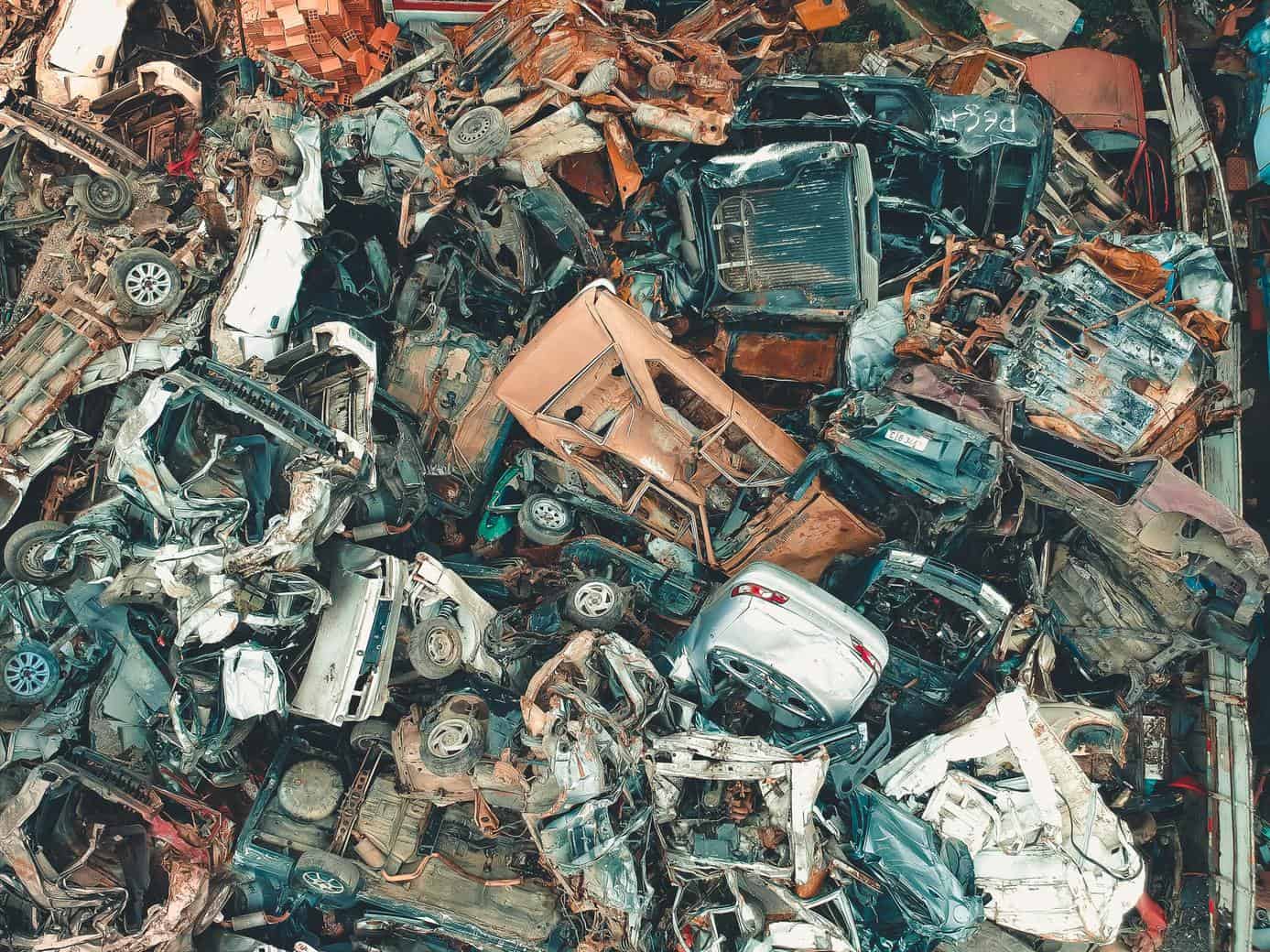
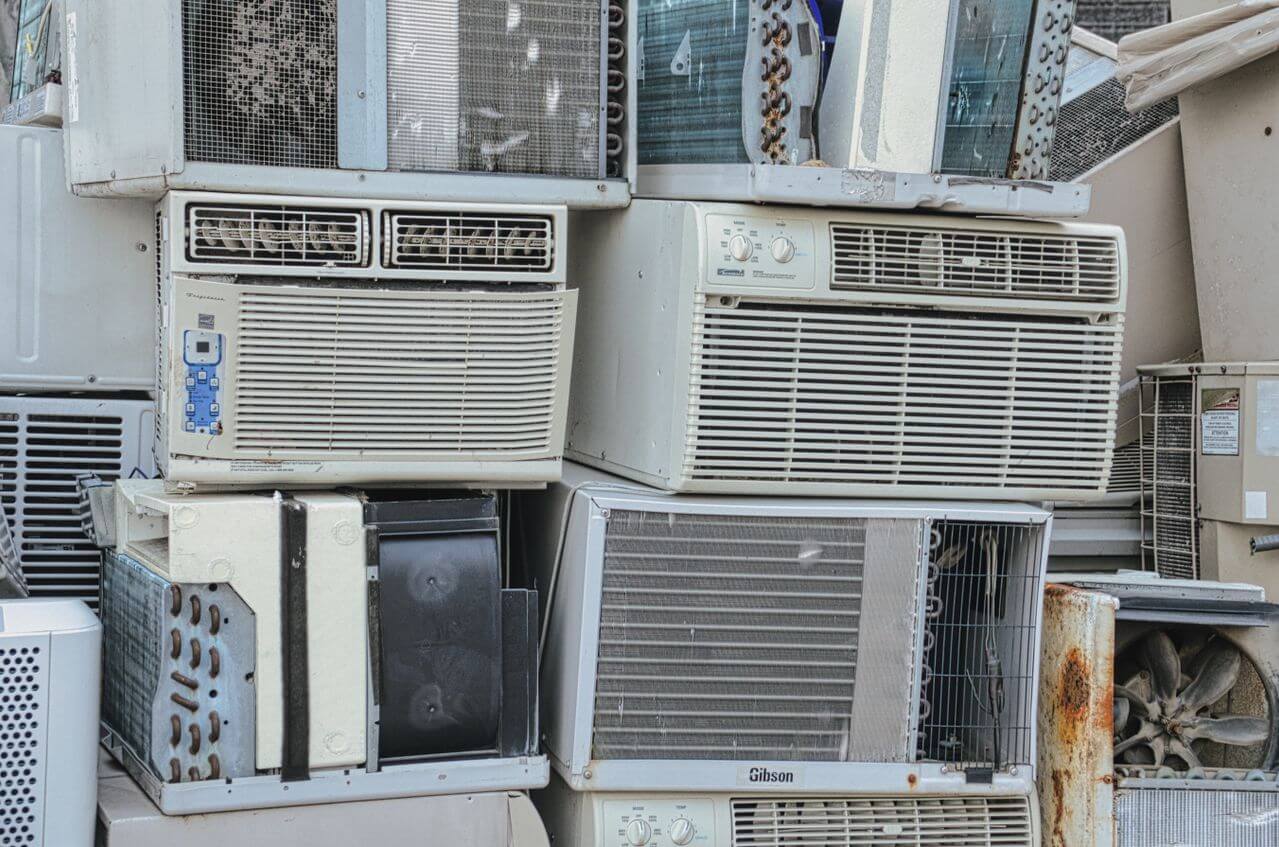
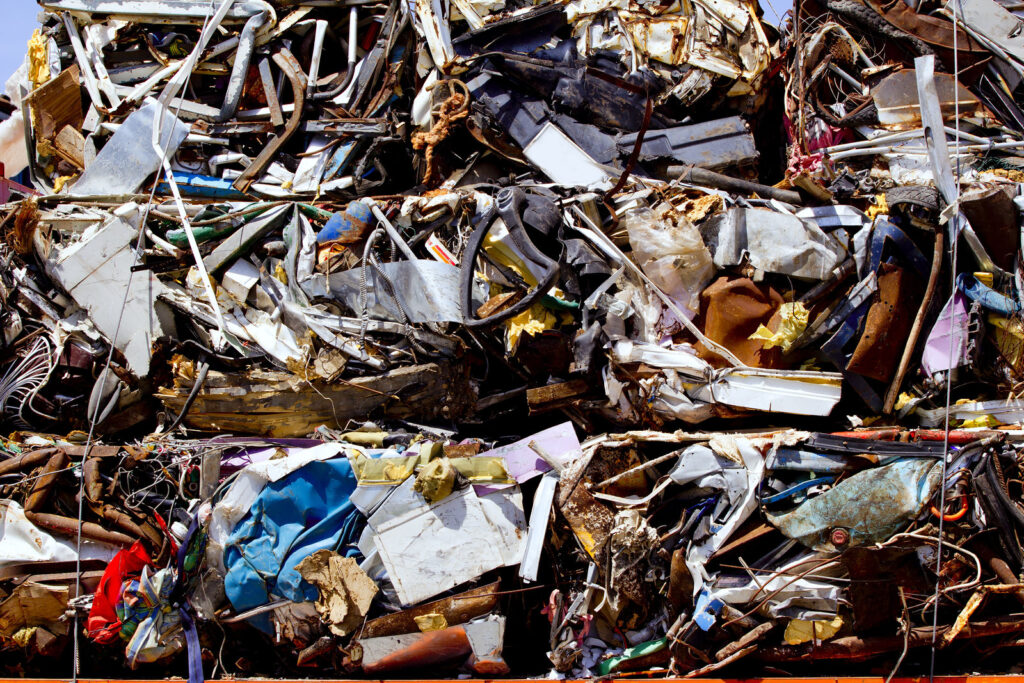
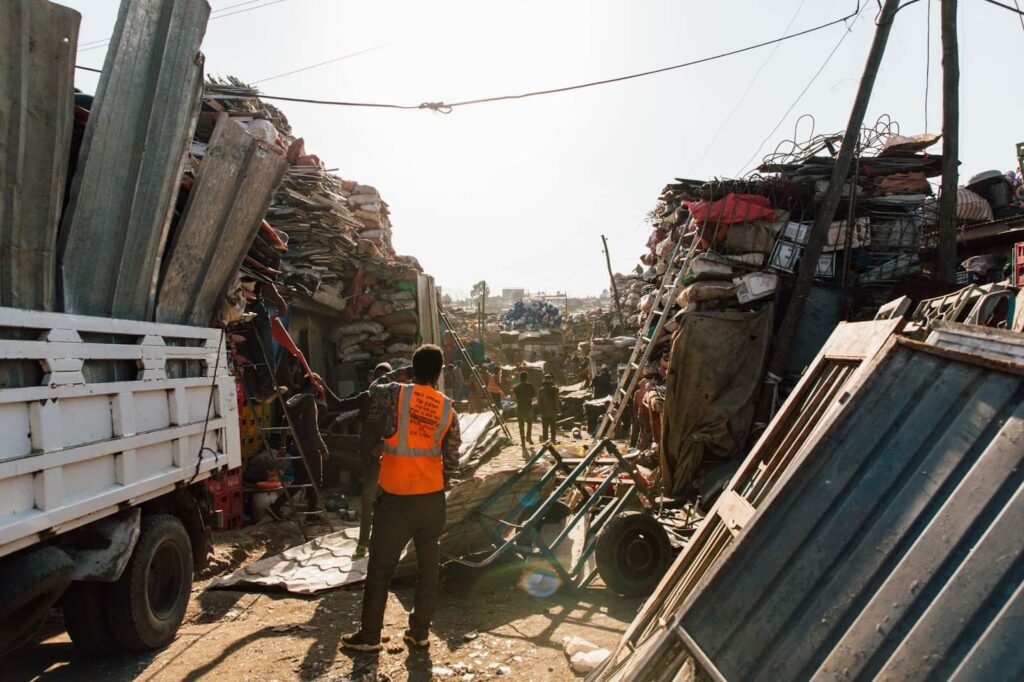
Scrap metal is any used metal or metallic material that can’t be used anymore but can be recycled. So, anything from old appliances to car parts, old machinery and manufacturing scrap is considered scrap metal.
Why Recycle Scrap Metal?
Recycling scrap metal is a win-win activity. It’s good for the planet and it puts money in your pocket. The scrap metal industry is enormous, and your old pipes, appliances, and wiring have real value.
Recycling scrap metal produces new metal products far more efficiently, and with a much lower environmental footprint, than mining and refining virgin ore.
Prices fluctuate based on global supply and demand, trade policy, and economic conditions. Tariffs on steel imports, for example, have played a significant role in shaping the U.S. market in recent years.
If you want to know exactly how much money you’ll make from recycling, your local scrap metal recycler is always your best source for accurate, up-to-date prices. And if you’re in Kansas City, Missouri, you can view our scrap metal prices (updated daily).
Types of Scrap Metal
The two main categories of scrap metal are ferrous and non-ferrous metals.
Ferrous Metals
The most prevalent class of recycled metals is ferrous metal: any scrap that contains iron or steel. Common examples include alloy steel, carbon steel, cast iron, and wrought iron. Because of their high carbon content, ferrous metals are susceptible to rust and corrosion, which eventually makes them obsolete, and ready for recycling.
Iron
Iron is a silver-white metal known for its strength and durability. It’s used extensively in construction, transportation, and machinery. One of iron’s best qualities is that its atoms are essentially indestructible. When melted down, they rearrange into new steel with new properties. That means iron can be recycled endlessly without any loss of quality.
Steel
Steel is an alloy of iron and carbon (typically 0.2%–2.1% carbon content), used in everything from construction and infrastructure to automotive manufacturing and household appliances.
According to the USGS Mineral Commodity Summaries 2026, in 2025 the U.S. iron and steel industry produced 82 million tons of raw steel, with an estimated sales value of about $149 billion (up from $27 billion in 2021). The total value of domestic iron and steel scrap purchases in 2025 was an estimated $19.7 billion, with apparent U.S. consumption of iron and steel scrap reaching 57 million tons. The scrap recycling rate in the United States has averaged between 80% and 90% over the past decade, with automobiles making up the primary source of old steel scrap.
Common ferrous items you likely already have at home include refrigerators, ovens, cast iron skillets, automotive parts, and pipes and plumbing fixtures.
Recycling one ton of steel conserves 1.1 tons of iron ore, 0.6 tons of coking coal, and 0.05 tons of limestone, a meaningful resource saving with every load of scrap that comes through our doors.

Non-ferrous Metals
Non-ferrous metals don’t contain iron (or contain only trace amounts). This category is prized for its corrosion resistance, lightweight properties, and malleability, which also makes many of these metals highly valuable at the scrap yard.
Here’s a breakdown of the most common non-ferrous scrap metals:
Aluminum
Aluminum is one of the most commonly recycled scrap metals in the world. Lightweight and rust-resistant, it’s used in beverage packaging, automotive parts, construction materials, and much more. According to the USGS Mineral Commodity Summaries 2026, the U.S. recovered about 3.6 million tons of aluminum from purchased scrap in 2025 — with 44% of that coming from old (post-consumer) scrap. Used aluminum cans are typically recycled directly into new cans, and recycling aluminum uses roughly 95% less energy than producing it from raw bauxite ore.
Copper
Copper is a reddish-brown metal used in electrical wiring, plumbing, HVAC systems, electronics, and roofing materials for its exceptional electrical and thermal conductivity. It’s also one of the most valuable metals you can bring to a scrap yard.
The USGS Mineral Commodity Summaries 2026 reports that in 2025, copper recovered from scrap contributed about 30% of the total U.S. copper supply, with an estimated 160,000 tons from post-consumer (old) scrap and 760,000 tons from new manufacturing scrap. Notably, in 2025 the USGS designated copper as a U.S. critical mineral, a reflection of just how essential it is to renewable energy systems, EV infrastructure, and national security.
Brass
Brass is an alloy of copper and zinc (and sometimes other metals), used in musical instruments, decorative hardware, and plumbing fixtures. Like all non-ferrous metals, it resists corrosion and is highly malleable. Recycling brass conserves natural resources and significantly reduces energy consumption and greenhouse gas emissions compared to producing it from virgin materials.
Copper and brass, along with bronze, are considered red metals. We’ve created a red metals recycling guide to help you better know how these can be recycled.
Nickel
Nickel is a hard, silvery-white metal most commonly used in stainless steel, batteries, and electronics. According to the USGS Mineral Commodity Summaries 2026, nickel recovered from scrap in 2025 accounted for approximately 60% of apparent U.S. consumption, proving how well-established nickel recycling is in the supply chain. As demand for electric vehicles and energy storage continues to grow, recycling nickel-containing batteries has become increasingly important for both environmental and strategic reasons.
Titanium
Titanium is strong, lightweight, and corrosion-resistant, making it the material of choice for aerospace components, medical implants, and high-performance sports equipment. Recycling titanium is more technically involved than other metals, but the benefit is significant: titanium can be recycled indefinitely without any loss of its properties or quality.
Zinc
Zinc is a bluish-white metal primarily used to coat iron and steel through a process called galvanizing, which prevents corrosion. It’s also used in battery production, construction materials, brass alloys, and fertilizers. According to the USGS Mineral Commodity Summaries 2026, the estimated value of zinc mined in the U.S. in 2025 was $2.2 billion. Refined zinc in the U.S. is recovered from secondary materials including galvanizing residues and scrap, and recycling it uses far less energy than smelting from ore.
How to Differ Ferrous And Non-ferrous Metals?
Not sure what your old items are made of? There’s a simple trick: check if the metal is magnetic.
- If it sticks to a magnet, it’s ferrous (contains iron or steel)
- If it doesn’t stick, it’s non-ferrous
This quick test is extremely handy when you want to sort your items before bringing them in and sorting can put more money in your pocket, since non-ferrous metals generally fetch higher prices.
Examples of Scrap Metal You Can Recycle TodayHere’s a practical scrap metal list of everyday items you probably already have at home:
- Kitchen appliances — Most kitchen appliances (refrigerators, microwaves, ovens, dishwashers) are made of ferrous materials. When you upgrade, don’t trash the old one, scrap it.
- Pots and pans — Aluminum and cast iron cookware are both recyclable. Instead of tossing worn-out cookware in the trash, bring it in.
- Sinks and faucets — Most sinks and faucets are made from brass or stainless steel, making them perfectly suitable for recycling. Swapping out a faucet? Don’t let the old one go to the landfill.
- Copper piping and tubes — Copper commands some of the highest scrap prices per pound. If you’re renovating or replacing plumbing, save every piece.
- Insulated copper wire — Old chargers, extension cords, and cables contain copper wire worth recycling. Gather them from every corner of your home and bring them in as a bundle.
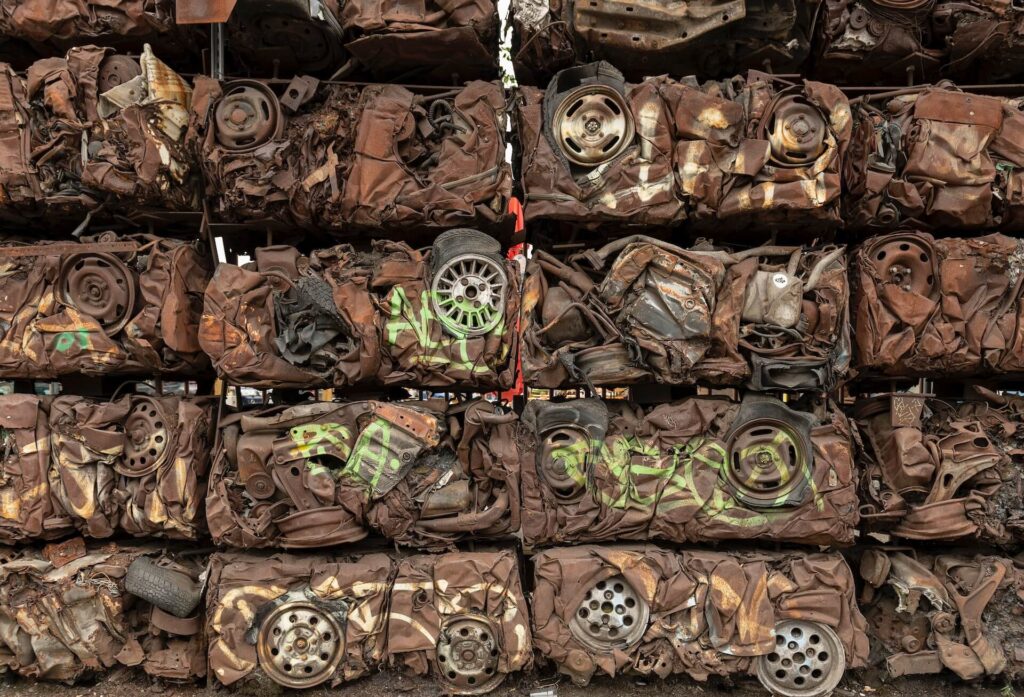
- Automotive parts — Old car parts (and whole vehicles) represent a major source of recyclable scrap. The USGS notes that automobile recycling runs at nearly 100% annually, with more than 13 million tons of steel recycled from vehicles each year in North America, the equivalent of about 17 million cars. A few tips before you bring yours in:
- Drain the vehicle of all fluids first.
- Separate ferrous and non-ferrous parts as much as possible. The non-ferrous pieces are worth more when sorted out.
- Only scrap the whole car if it truly can’t be used or repaired anymore.
- Anything aluminum — Soda cans, sheet aluminum, car rims, window frames, patio furniture, etc. If it’s aluminum, it can be recycled. Aluminum is one of the most recycled materials on the planet for a reason.
- Jewelry and accessories — Missing an earring? Have a broken necklace or damaged bracelet you can’t fix? Earrings, rings, bracelets, cufflinks, money clips — all of it can be recycled. Don’t throw it away.
See our full list of accepted materials and today’s scrap metal prices.
Final Word
Congratulations! Now you have everything you need to start recycling scrap metal!
We hope this guide helped you understand what scrap metal is, how to identify the different types, and which everyday items you can start recycling today.
There’s no reason not to declutter your space, earn some cash, and do something good for the planet at the same time. Every one of us can make a real difference.
If you have any questions about what we accept or how to get started, feel free to contact us. We’d love to help.
Happy scrapping!
Statistics sourced from the U.S. Geological Survey Mineral Commodity Summaries 2026 (February 2026), covering 2025 production and consumption data.